How Smaller Memory Care Homes Enhance Engagement and Daily Living
Business Name: BeeHive Homes of Plainview
Address: 1435 Lometa Dr, Plainview, TX 79072
Phone: (806) 452-5883
BeeHive Homes of Plainview
Beehive Homes of Plainview assisted living care is ideal for those who value their independence but require help with some of the activities of daily living. Residents enjoy 24-hour support, private bedrooms with baths, medication monitoring, home-cooked meals, housekeeping and laundry services, social activities and outings, and daily physical and mental exercise opportunities. Beehive Homes memory care services accommodates the growing number of seniors affected by memory loss and dementia. Beehive Homes offers respite (short-term) care for your loved one should the need arise. Whether help is needed after a surgery or illness, for vacation coverage, or just a break from the routine, respite care provides you peace of mind for any length of stay.
1435 Lometa Dr, Plainview, TX 79072
Business Hours
Families typically begin taking a look at memory care when something specific breaks down in your home. A range left on. Medications avoided or doubled. A front door opened at 3 a.m. Without any awareness of danger.
The top places individuals tend to tour are large assisted living neighborhoods, due to the fact that they are visible, greatly marketed, and often located on primary roads. Those structures can be gorgeous, however many households walk out thinking, "This seems like a hotel, not a home." When an individual is dealing with dementia, that difference matters much more than the décor.
Over the last decade, I have actually seen a different design quietly prove itself: little memory care homes tucked into residential neighborhoods, frequently licensed as assisted living or similar residential care. Normally 6 to 16 homeowners, one kitchen, a small yard, personnel who understand every family by name.
These smaller homes are not instantly much better than every big neighborhood, however they do have structural benefits for engagement, safety, and daily lifestyle. The scale of the environment changes how people with dementia associate with their surroundings, to personnel, and to each other.
This article looks closely at how those smaller sized settings can enhance day-to-day living, when they are an excellent fit, and what trade offs households need to expect compared with bigger senior care options.
Why scale matters a lot in dementia care
Dementia slowly narrows an individual's ability to filter information. Noise, motion, visual mess, even strong patterns in carpet and wallpaper can become complicated or overwhelming. What feels "vibrant" to a healthy adult can feel chaotic to somebody with mid phase dementia.
In a huge assisted living or memory care wing, a number of factors assemble:
Residents frequently walk long hallways that look similar in every direction.
Dining-room may serve 30 to 60 individuals at a time.Activities take on overhead announcements, televisions, visitors, and passing personnel.
For someone who has difficulty processing stimuli, that volume of input can result in withdrawal, agitation, or "exit looking for" habits. I have seen locals in big communities spend the majority of their day parked in a hallway chair, partially because the environment itself is too intricate to navigate.
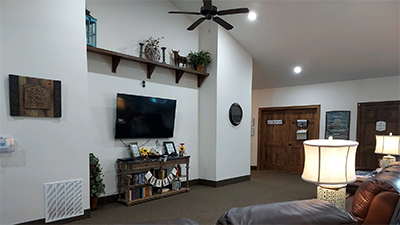
In a smaller sized memory care home, the environment is simplified without feeling institutional. There is typically one main living room, often visible from the dining table and cooking area. Staff and citizens share the same spaces, so there are less unknowns and less decisions required just to get through the morning.
That shift in scale modifications what ends up being possible.
The feel of home and why it influences engagement
Familiarity is not a soft, nostalgic idea in dementia care. It is a practical tool. When the brain loses short-term memory and complex reasoning, it leans more greatly on deeply deep-rooted patterns: the shape of a cooking area, the sound of dishes, the ritual of making coffee or folding towels.
Smaller memory care homes can tap into those patterns in useful ways.
I remember a female I will call Marie, a former grade school instructor who had lived alone after her hubby died. She went into a big community first, with a well designated memory care system. Within two weeks, she had stopped altering clothing routinely and resisted going to the big dining room. Her chart started to show "rejections," and staff gently recommended an antidepressant.
Her daughter moved her to a 10 bed home in a nearby area. The very first early morning there, staff invited Marie to "assist set up for breakfast." They handed her a stack of napkins and simple place mats. She needed no instructions. Within minutes she was humming to herself, setting out the table just as she had done for years with her own household and trainees. That little act, in a home style dining-room, offered her a role instead of a passive seat at a restaurant size table.
In a smaller sized setting, engagement frequently originates from this sort of ingrained opportunity, not just from arranged activities. When staff can see and react to tiny openings for involvement, you get:

Quieter mornings with natural discussion rather of screamed directions,
More movement without official "workout class," Meaningful jobs that seem like real life, not recreation.The physical scale of the home supports that. An employee in the kitchen area can quickly observe that a resident is wandering with restless energy and reroute it into drying dishes, watering patio assisted living BeeHive Homes of Plainview plants, or sweeping a little walkway.
Large buildings can mimic home like aspects, but an authentic home sized area removes much of the artifice. Homeowners do not have to translate an activity calendar or long passages to find something to do. Life is occurring right around them, and they can step into it.
Staffing patterns and relationships in smaller homes
The staffing design is where little memory care homes often diverge most greatly from traditional assisted living.
In a big neighborhood, caretakers are typically assigned to numerous locals throughout several hallways. Dietary personnel run the cooking area. Activities staff lead programs. Housekeeping staff clean rooms. That specialization has benefits, yet it can fragment relationships. Residents may see a lots faces in a single afternoon, none of whom seem like "my person."
In a smaller home, the same staff generally use numerous hats. The caregiver who assists with bathing in the early morning may likewise sit at the table during lunch, load the dishwashing machine, then lead an easy music activity later on. That connection has a couple of powerful results:
Families can reach the same familiar staff member to ask, "How did Mom really do this week?" instead of hearing from whoever takes place to be on duty.
Personnel notification subtle changes early, such as a slight shift in gait, new confusion at sunset, or a reduction in appetite. Citizens experience fewer strangers touching them, which decreases stress and anxiety throughout intimate care like bathing or toileting.I typically inform households to listen for how personnel talk about residents. In a little home, you are more likely to hear, "This is Mr. Jones. He likes his coffee strong and likes speaking about his years in the Navy." In a big setting, the language can wander toward task based shorthand such as "She's a two individual transfer, requires full help."
Neither description is malicious. It is a reflection of scale and workflow. But for somebody living with dementia, being known as an entire person is not simply mentally comforting, it directly enhances care.
When personnel understand histories carefully, they can utilize that understanding to pacify agitation and produce engagement. A caretaker who bears in mind that Mrs. Singh used to run a clothing store can invite her to help pick clothing or fold scarves. That sort of individual focused engagement is simpler to deliver when 8 to 12 citizens share a group of constant caregivers.
Daily rhythm in a smaller sized memory care home
The rhythm of the day typically informs you more about a memory care setting than any brochure.
In big assisted living or senior care neighborhoods, schedules tend to revolve around building broad systems: meal delivery to lots of residents, group activity calendars, transportation schedules, and staffing shift modifications. The outcome is that homeowners should fit their lives around those systems.
In a small memory care home, personnel can flex the schedule around the locals. Breakfast might happen in waves for early birds and later sleepers. If 3 homeowners regularly sleep finest after lunch, staff can change care tasks so those hours remain secured. You see less citizens lined up in wheelchairs waiting for meals or showers, due to the fact that there is merely less institutional equipment to feed.
One 8 bed home I worked with kept a basic white boards in the kitchen area with each resident's favored wake time, bathing pattern, and "finest time of day." Staff inspected it as naturally as a grocery list. That board prevented a well indicating caretaker from waking a night owl at 6:30 a.m. "to get a running start on the day," which could otherwise trigger a cycle of exhaustion and agitation.
The home's little size also made versatile activities possible. When a resident with frontotemporal dementia became restless and loud throughout afternoons, personnel could move a light snack and a walk into an earlier time, then provide quiet one to one time with headphones and familiar music throughout his most agitated hours. That personal modification would be far harder in a structure where one activities organizer is accountable for 50 residents.
Rhythm affects engagement in both instructions. A calm, predictable flow of the day makes it much easier for citizens to take part. In turn, engaged citizens are less likely to experience behavioral spikes that disrupt that stability.
Safety, wandering, and liberty of movement
Families frequently assume that a bigger, more protected memory care system will be safer. The reasoning seems uncomplicated: more personnel, more video cameras, more regulated gain access to. The reality is subtler.
People with dementia require both security and autonomy. Excessive limitation, and they lose muscle strength, balance, and the sense that they have any control over their day. Too much flexibility in an environment they can not translate, and they get lost, fall, or leave the structure without understanding the risk.
Smaller homes often strike a practical balance. The physical footprint is easier to browse: a short corridor, a noticeable living-room, cooking area in the center, outside location just beyond glass doors. For residents who like to rate, personnel can keep an eye on them almost constantly without turning to alarms or locked interior doors.
I recall a gentleman who had been labeled a "serious elopement danger" at his prior large community. There, he repeatedly attempted to leave through the busy front lobby, frequently when visitors were arriving. He was moved to a 12 resident memory care home with a fenced yard and circular strolling course. Because home, personnel simply opened the back door. He could stroll loops outdoors for long stretches, return within when ready, and hardly ever approached the front door at all. His "elopement threat" turned out to be a simple need to walk with function in an environment that made good sense to him.
This is not to say smaller sized homes are always more secure. The model relies heavily on mindful staff who comprehend dementia care. If staffing is thin, a single caregiver might still have a hard time to monitor kitchen tools, hot liquids, and outside spaces. Because of that, households ought to not presume that "little" equals "protected" without asking direct questions about staffing ratios, training, and nighttime coverage.
Still, when succeeded, the layout and visibility of a smaller sized home can supply both much safer wandering and more regular freedom of motion than many bigger facilities have the ability to offer.
Emotional climate and social dynamics
The social material of a memory care home can either enhance identity or deteriorate it. In a large neighborhood, the sheer variety of locals can create inner circles, confidential clusters of people sitting together without actually connecting, or a revolving door of neighbors as individuals relocate and out.
In a smaller setting, the group tends to stabilize. Ten or twelve individuals, with a mix of cognitive and physical capabilities, end up being familiar faces really rapidly. While not everyone becomes buddies, residents do recognize "their individuals."
I have actually seen a peaceful sense of mutual enjoying establish in these homes. One woman in early phase dementia would gently advise her next-door neighbor with advanced disease to finish her soup or hold the handrail on the way to the bathroom. She could do this respectfully because they shared almost every meal and many hours in the very same living-room. That continuity developed opportunities for natural peer support that structured "friend systems" often stop working to achieve.
The flip side is that a negative dynamic can likewise take stronger hold in a small setting. A resident who is very loud, physically aggressive, or vulnerable to inappropriate comments can affect the entire house, whereas a big structure may have more options to different or redirect that person.
This is one of the trade offs families need to weigh. Smaller sized memory care homes frequently feel more intimate and mentally grounded, but they also have less capability to "conceal" challenging habits. The key question to ask potential homes is how they handle those scenarios: Do they have access to mental health or dementia professionals? How do they support staff emotionally? What requirements lead them to ask a resident to transfer to a higher level of care?
Medical care, treatments, and advanced needs
From a strictly medical viewpoint, little memory care homes and larger assisted living or senior care communities face similar restrictions. Neither is a health center. Neither can replace skilled nursing when a resident needs extensive injury care, complex feeding tubes, or continuous medical monitoring.
Where the distinction frequently appears is in how doctor communicate with the setting.
Physicians, nurse specialists, physiotherapists, and hospice companies going to a little home frequently see the same residents each time and come to know the staff well. Communication lines shorten. When personnel report, "She has actually been more drowsy and less interested in food for 3 days," a provider can rely on that observation as part of a continuous relationship.
In huge structures, service provider visits can feel more like medical rounds. Notes are left in electronic systems, messages go through several hands, and subtle patterns may be more difficult to identify in the middle of the volume of data.
That said, bigger communities typically have more robust in house offerings: onsite centers, routine therapy days, group exercise led by qualified instructors, and transportation to professional appointments. Little homes typically count on outdoors providers who enter into the home or households who organize transport individually.
Families need to plan ahead about likely trajectories. A person in early or mid stage dementia who is otherwise relatively healthy can typically do effectively in a small home for several years. Someone with sophisticated cardiac arrest, unchecked diabetes, or a history of regular hospitalizations may eventually require the stronger medical facilities of a skilled nursing center, despite cognitive status.
Smaller homes regularly partner with hospice or home health agencies to bridge part of this gap. Hospice, in particular, can layer sign management, nursing oversight, and household support on top of the day-to-day caregiving the home provides.
Cost, policies, and what households must ask
Cost comparisons between little memory care homes and large assisted living communities vary commonly by area, but a couple of patterns recur.
Per month, lots of small homes fall in the same basic range as dedicated memory care systems within bigger buildings. They may be slightly more or slightly less costly, depending upon local real estate and staffing markets. What changes more noticeably is how the cost structure is built.
Some little homes utilize an "all inclusive" rate that covers space, board, and basic support with personal care. Others charge a base rate plus tiered care charges as needs increase. Bigger communities often lean greatly on tiered structures, where the preliminary price appears lower till households realize that practically every kind of dementia care, from medication management to incontinence support, triggers an additional fee.
Regulatory frameworks likewise differ. Lots of little memory care homes run under assisted living or residential care regulations, which can differ from one state to another. In some regions, this allows an extremely home like environment with strong flexibility. In others, it can suggest fewer mandated staffing requirements or less regular examinations than big centers face.
Families must not presume that every little home satisfies the exact same expert standards. The intimacy of the setting can hide both quality and overlook. Careful concerns matter more than marketing language.
A short, focused list of concerns can help during tours:
-
Staffing and training
Inquire about staff to resident ratios for days, evenings, and nights, and the number of staff on each shift are completely trained in dementia care, not simply "oriented" to the house. -
Daily life and engagement
Demand particular examples of how residents with different abilities spend their mornings and afternoons, including how the home includes those who no longer join group activities however are still awake and alert. -
Medical coordination and emergencies
Discover which physicians or nurse professionals follow locals, how typically they visit, and what occurs if a resident's condition changes suddenly during the night or on a weekend. -
Family communication
Ask how and when personnel contact families about regular updates, small concerns, and severe occurrences, and whether there is a single primary contact for your enjoyed one. -
Limits of care
Clarify what modifications would trigger the home to advise transfer to a higher level of care, such as duplicated hospitalizations, aggressive habits, or innovative medical equipment.
Listening to how staff response these questions will tell you as much as the material itself. Look for concrete examples over unclear assurances.
When a smaller sized memory care home is the ideal fit
No single design fits everyone with dementia. Still, there are patterns in who tends to prosper in smaller homes.
People who lived in modest houses and value privacy and regular frequently settle more quickly than in resort style senior care environments. Those who become overwhelmed by noise or crowds generally benefit from the calmer scale. Individuals who take pleasure in easy, hands on tasks like helping in the kitchen, folding laundry, or tending a little garden can discover daily purpose more quickly when the home's size makes those activities noticeable and accessible.
Small homes can likewise be a mild shift for families who have actually been supplying care themselves and are battling with guilt. Instead of moving a relative into a big, unknown complex, they are welcoming them into another house, with a smell of real cooking and the noise of a tv in the background. That psychological bridge matters, both for the individual with dementia and for the household's long term relationship with the care team.
At the same time, there are situations where a bigger community or various level of dementia care might be better:
An individual who yearns for regular getaways, big group socialization, and high energy occasions may feel bored in a quiet house setting.
Somebody with high acuity medical requirements could require on website nursing that most little homes can not provide. Families who anticipate requiring short-term coverage for restricted durations might choose bigger neighborhoods that clearly promote respite care options.The most important action is to match the environment to the individual's history, character, and current stage of dementia, instead of to a generic idea of "the very best" senior care.
Final thoughts for households weighing their options
Choosing memory care is hardly ever a theoretical exercise. It happens after a fall, a roaming incident, or months of tired caregiving. Feelings run high, and the industry's glossy marketing can be confusing.
It assists to stroll into each setting with a clear sense of what you are looking for: not just security, however everyday engagement, human connection, and a rhythm of life that respects who your loved one has actually always been. Smaller sized memory care homes can excel in those locations exactly because their size restricts how institutional they can become.
Look past the furniture and paint colors. Watch how personnel speak with locals, and how locals react. Notification whether life seems to flow naturally, with little minutes of function scattered through the day, or whether individuals primarily sit waiting for the next scheduled activity or meal.
Whether you pick a small home, a bigger assisted living neighborhood with a devoted memory care system, or a mix of respite care and in home support along the method, the goal is the exact same: an every day life that feels understandable, safe, and silently significant to the individual living it.
BeeHive Homes of Plainview provides assisted living care
BeeHive Homes of Plainview provides memory care services
BeeHive Homes of Plainview provides respite care services
BeeHive Homes of Plainview supports assistance with bathing and grooming
BeeHive Homes of Plainview offers private bedrooms with private bathrooms
BeeHive Homes of Plainview provides medication monitoring and documentation
BeeHive Homes of Plainview serves dietitian-approved meals
BeeHive Homes of Plainview provides housekeeping services
BeeHive Homes of Plainview provides laundry services
BeeHive Homes of Plainview offers community dining and social engagement activities
BeeHive Homes of Plainview features life enrichment activities
BeeHive Homes of Plainview supports personal care assistance during meals and daily routines
BeeHive Homes of Plainview promotes frequent physical and mental exercise opportunities
BeeHive Homes of Plainview provides a home-like residential environment
BeeHive Homes of Plainview creates customized care plans as residents’ needs change
BeeHive Homes of Plainview assesses individual resident care needs
BeeHive Homes of Plainview accepts private pay and long-term care insurance
BeeHive Homes of Plainview assists qualified veterans with Aid and Attendance benefits
BeeHive Homes of Plainview encourages meaningful resident-to-staff relationships
BeeHive Homes of Plainview delivers compassionate, attentive senior care focused on dignity and comfort
BeeHive Homes of Plainview has a phone number of (806) 452-5883
BeeHive Homes of Plainview has an address of 1435 Lometa Dr, Plainview, TX 79072
BeeHive Homes of Plainview has a website https://beehivehomes.com/locations/plainview/
BeeHive Homes of Plainview has Google Maps listing https://maps.app.goo.gl/UibVhBNmSuAjkgst5
BeeHive Homes of Plainview has Facebook page https://www.facebook.com/BeeHivePV
BeeHive Homes of Plainview has an YouTube page https://www.youtube.com/@WelcomeHomeBeeHiveHomes
BeeHive Homes of Plainview won Top Assisted Living Homes 2025
BeeHive Homes of Plainview earned Best Customer Service Award 2024
BeeHive Homes of Plainview placed 1st for Senior Living Communities 2025
People Also Ask about BeeHive Homes of Plainview
What is BeeHive Homes of Plainview Living monthly room rate?
The rate depends on the level of care that is needed. We do an initial evaluation for each potential resident to determine the level of care needed. The monthly rate is based on this evaluation. There are no hidden costs or fees
Can residents stay in BeeHive Homes until the end of their life?
Usually yes. There are exceptions, such as when there are safety issues with the resident, or they need 24 hour skilled nursing services
Do we have a nurse on staff?
No, but each BeeHive Home has a consulting Nurse available 24 – 7. if nursing services are needed, a doctor can order home health to come into the home
What are BeeHive Homes’ visiting hours?
Visiting hours are adjusted to accommodate the families and the resident’s needs… just not too early or too late
Do we have couple’s rooms available?
Yes, each home has rooms designed to accommodate couples. Please ask about the availability of these rooms
Where is BeeHive Homes of Plainview located?
BeeHive Homes of Plainview is conveniently located at 1435 Lometa Dr, Plainview, TX 79072. You can easily find directions on Google Maps or call at (806) 452-5883 Monday through Sunday 9:00am to 5:00pm
How can I contact BeeHive Homes of Plainview?
You can contact BeeHive Homes of Plainview by phone at: (806) 452-5883, visit their website at https://beehivehomes.com/locations/plainview/, or connect on social media via Facebook or YouTube
Visiting the Broadway Park provides scenic overlooks that can be enjoyed by residents in assisted living or memory care during senior care and respite care outings.